
About
GEMEI is a leading domestic producer of tungsten, molybdenum, and their alloy products. Since 1995, we have been dedicated to the development, production, and sales of tungsten and molybdenum, their alloys, and composite materials, such as ML, TZM, MHC, among others. GEMEI possesses a comprehensive set of tungsten and molybdenum processing equipment. Through the collective efforts of all our employees and as the company has developed, GEMEI has established a team of professionals with rich management experience and high qualifications. This team implements quality control throughout the entire production process. GEMEI looks forward to collaborating with you, offering higher qualitystandards, faster delivery times, and superior product services. https://www.gemeimetal.com/
Home
Molybdenum and Tungsten products, renowned for their exceptional strength and heat resistance, are vital components in various industries. Molybdenum is prized for its high melting point and corrosion resistance. Tungsten, known as one of the hardest metals, finds extensive use in electrical components, mining equipment, and automotive manufacturing. These versatile materials contribute significantly to modern technological advancements, ensuring durability and reliability across diverse sectors.
Contact
Tel:+86-18092965608
Email:sales@gemeimetal.com john@gemeimetal.com
Address: No. 1, Shizi Chuangye Road, Jingfa Second Road, new industrial park, Yanliang economic and Technological Development Zone, Xi'an, Shaanxi, China.
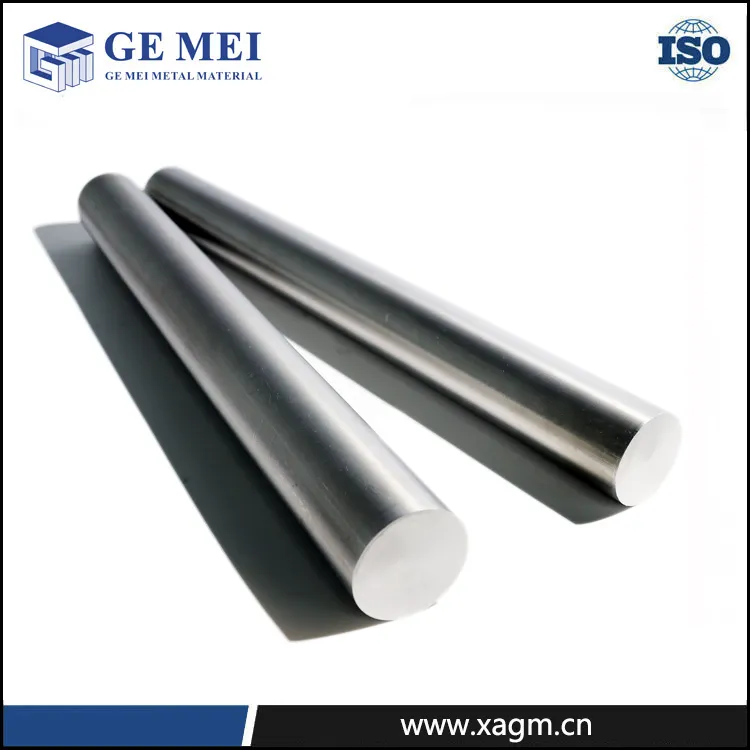 High-Purity Molybdenum Rods & Industrial Metal Bars
GEMEI manufactures high-performance molybdenum rods tailored for advanced semiconductors, aerospace, and high-temperature industries. Engineered for extreme thermal resistance and uniform grain structure, we deliver exceptional reliability directly from our ISO-certified facility.
What is a ground molybdenum rod?
An custom molybdenum rods is a high-performance refractory metal bar manufactured through advanced powder metallurgy, swaging, and drawing processes. Featuring a characteristic metallic luster and uniform internal grain structure, these dense metal bars serve as essential structural elements capable of enduring severe thermal and mechanical stresses in vacuum, inert, and high-temperature environments.
Uses of Molybdenum Rods in Modern Industry
The applications of a molybdenum rod are fundamental to the advancement of high-temperature metallurgy and electronics. Due to their superior melting point, excellent electrical conductivity, and low thermal expansion, high-purity molybdenum rods serve as critical material solutions across heavy industries, advanced electronics, and precision research sectors. GEMEI precision-engineers every single bar to ensure unmatched reliability in the following core applications:
- High-Temperature Furnaces
Core Components of High-temperature Furnaces: Extensively used as high-performance heating elements, heat shields, racks/boats, and robust connecting rods in sintering and reduction furnaces, directly withstanding extreme temperatures.
Glass and Ceramic Industry: Employed as reliable melting electrodes and stirring rods, thanks to their non-contaminating properties to melts and excellent corrosion resistance against molten glass.
Single Crystal Growth: Applied as heaters and crucible supports in demanding growth furnaces for sapphire and monocrystalline silicon production.
- Semiconductor and Photovoltaic Industry
Silicon Crystal Growth: Utilized as premium heaters and thermal field shielding components in the advanced Czochralski method (CZ method).
Ion Implantation: Serves as the base material for key components within high-energy ion implanters, preventing material degradation.
- Electrical Discharge Machining (EDM)
High-performance Electrodes: Deployed for machining high-hardness, complex-shaped die steel workpieces, featuring exceptionally low wear and high-precision cutting.
- Metal Processing and Additive Manufacturing
Hot Isostatic Pressing (HIP) and Hot Press Sintering Dies: Used for manufacturing powder metallurgy products such as cemented carbide and industrial advanced ceramics.
3D Printing (SLM): Serves as reliable feedstock rods of pure molybdenum or specialized molybdenum alloys explicitly for additive manufacturing fields.
- Aerospace and Defense
Engine Components: Deployed as prototype or test components for rocket engine nozzles and high-temperature strategic structural parts.
High-Thermal Structures: Selected as a premium candidate material for high-temperature components such as wing leading edges.
- Medical Devices
X-Ray Diagnostics: Functions as an ideal substrate material for rotating anode targets in medical equipment such as CT scanners and X-ray tubes (often used in combination with tungsten).
- Alloy Additives
Steelmaking Enhancements: Extensively used as a molybdenum elemental additive in high-grade steelmaking (e.g., high-speed steel and corrosion-resistant stainless steel) to boost hardness and tensile limits.
Key Characteristics & Classifications of Molybdenum Rods
Engineered to outperform standard industrial metals, our heavy-duty swaged bars stand out among raw molybdenum products due to their remarkable elemental properties. To meet urgent engineering schedules, GEMEI maintains a massive molybdenum rod stock across various standard dimensions, all manufactured to deliver the following core advantages:
Ultra-high melting point (2620℃): Ranks among the highest melting points of all common industrial metals, remaining completely stable during intense thermal cycles.
Excellent high-temperature strength: Retains considerable tensile strength, stiffness, and hardness even at soaring operating temperatures exceeding 1000℃.
Good thermal and electrical conductivity: Features outstanding thermal dissipation capabilities, with an electrical conductivity rating roughly one-third that of pure copper.
Low coefficient of thermal expansion: Exhibits minimal dimensional change or thermal distortion under radical temperature variations, ensuring precision structural stability.
Exceptional corrosion resistance: Demonstrates high resistance to erosion against various molten metals, aggressive industrial acids, and alkalis.
Excellent machinability: Can be easily formed, turned, and finished through secondary processes such as precise forging, rolling, and centerless grinding.
Advanced Material Classification:
Pure Molybdenum: High purity (≥99.95%) configuration, providing the widest range of applications for lighting and electronic filaments.
Molybdenum Alloys: Advanced variants such as Mo-La (Lanthanum-Molybdenum), Mo-Zr (Zirconium-Molybdenum), and TZM (Titanium-Zirconium-Molybdenum) engineered to further elevate recrystallization temperatures, high-temperature strength, and overall toughness.
Need an instant sourcing quote?
Check our available diameters and competitive bulk-order molybdenum rod price options by reaching out to our customer service desk today! [Inquire About Molybdenum Rod Inventory]
If you are looking for a reliable molybdenum rod supplier, please contact us.
As a trustworthy and reliable refractory metal components supplier in china, we provide you with refractory metal component.
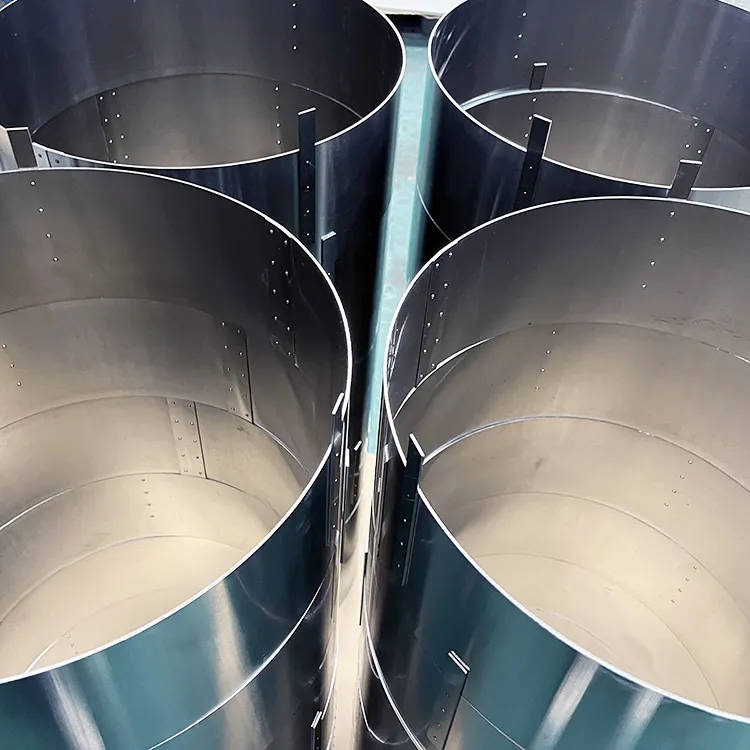 What is a Molybdenum Shield
In the thermal field of a high-temperature furnace, these two components are usually arranged around the heating element (heat source) and the workpiece to be heated (e.g., crucible), forming a closed or semi-closed high-temperature environment.
Definition: Generally refers to a cylindrical or tapered cylindrical molybdenum heat shield.
Position: Vertically installed on the periphery of heating elements (e.g., graphite or molybdenum heating elements), and sometimes arranged in a multi-layer nested structure.
Core Function: Mainly blocks radial heat radiation loss, forms a vertically uniform hot zone, reduces heat dissipation to the furnace wall, and improves thermal efficiency.
Molybdenum End Shield
Definition: Generally refers to a plate-shaped, dish-shaped or cover-shaped molybdenum heat shield.
Position: Installed at the top and/or bottom of the thermal field.
Core Function: Mainly seals the upper and lower ends of the thermal field, blocks axial heat radiation and convective heat loss, and helps stabilize the airflow and temperature gradient inside the thermal field.
Applications of molybdenum shielding components
Main Application Equipment
Sapphire/monocrystalline silicon crystal growth furnaces (Kyropoulos method, Czochralski method): Core thermal field components.
Vacuum sintering furnaces: Used for sintering tungsten carbide, ceramics, etc.
Vacuum heat treatment furnaces: For solution treatment of high-temperature alloys.
PVD coating equipment: Served as backing plates or heat shields for sputtering targets.
Key Points for Selection and Design
Material SelectionMolybdenum-lanthanum alloy is the first choice for applications with extremely high requirements for service life and stability. For short-term operation or relatively lower temperature scenarios, pure molybdenum or TZM alloy can be adopted.
Structural DesignAdopt a multi-layer shielding structure with gaps between layers. Based on the principle of radiation heat insulation, this design offers far superior heat insulation performance compared with a single-layer thick shield. Expansion joints are designed on the shield to release thermal stress.
Surface TreatmentSometimes the surface is polished to reduce the emissivity coefficient and decrease radiative heat absorption; alternatively, coating treatment (e.g., high-temperature oxidation-resistant coating) is applied to cope with potential abnormal oxidation.
Cooling ConsiderationsIn large-scale or high-power furnaces, the end shields and cylindrical shields may need to be designed in coordination with water-cooled furnace walls to create a significant temperature gradient.
As a trustworthy and reliable tungsten and molybdenum supplier in china, we provide you with refractory metal component.
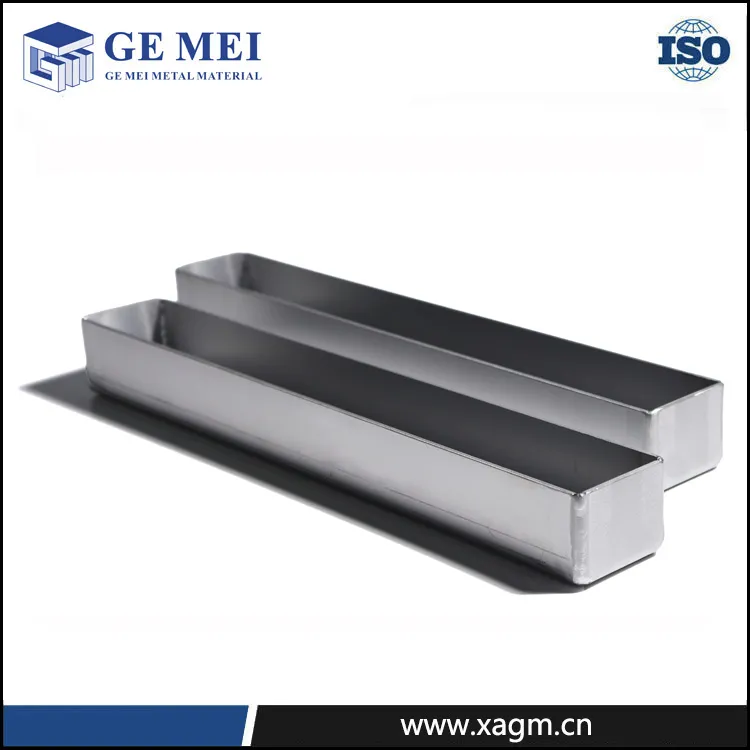 Tungsten Boat Design and Performance
A custom tungsten boats is an open, shallow container designed for material loading, heating and evaporation under vacuum or a protective atmosphere. It can be manufactured in tray, trough or custom shapes, with optional hooks or electrode connections to suit different equipment designs.
Open Structure – Supports convenient material loading and vapor release.
High-Temperature Stability – Maintains its shape during demanding thermal processes.
Controlled Electrical Resistance – Thickness and geometry can be adjusted for resistance-heating requirements.
High Purity and Low Outgassing – Helps reduce contamination during vacuum processing.
Custom Tungsten Boat Specifications and Options
GEMEI manufactures custom tungsten evaporation boats products according to equipment dimensions, heating requirements and customer drawings. Boat shape, thickness, connection design and surface condition can be adjusted for vacuum evaporation, heat treatment and other high-temperature processes.
Custom holes, slots, mounting ends and electrical connections can be added according to the installation method. Final specifications are reviewed based on the processing material, equipment design and operating conditions.
Tungsten Boat Manufacturing and Available Designs
GEMEI manufactures high-purity tungsten boats products according to the required shape, thickness, electrical resistance and equipment connection. Different manufacturing methods can be selected based on the product structure and operating conditions.
Formed Tungsten Boats
Rolled tungsten sheet can be cut and formed into shallow trays, troughs and other open structures. This method is suitable for relatively thin and standardized boat designs.
Machined Tungsten Boats
Thicker plates or blanks can be machined into custom shapes when greater rigidity, specific dimensions or complex connection features are required.
Custom Tungsten Boat Design Options
Available designs may include flat-bottom, V-shaped, trough-shaped and drawing-based structures, with optional holes, slots, hooks or extended ends for mounting and electrical connection.
Final dimensions, thickness, surface condition and connection design are confirmed according to the customer’s drawing and equipment requirements.
Applications of Tungsten Boats
A tungsten boat is commonly used to hold and heat small quantities of material under vacuum or a protective atmosphere. Its open structure supports convenient material loading, controlled heating and vapor release.
Vacuum Evaporation and PVD Coating
Tungsten boats can serve as resistance-heating evaporation sources in vacuum coating systems. They are used to heat compatible metals or compounds before vapor deposition onto optical, electronic or decorative substrates.
Semiconductor and Electronic Processing
Custom tungsten boats may be used as material carriers or heating components in semiconductor and electronic manufacturing equipment requiring clean, stable operation under controlled atmospheres.
Heat Treatment and Material Processing
Tungsten boats can hold small parts, powders or samples during annealing, sintering and other high-temperature processes in vacuum or inert-gas furnaces.
Laboratory and Research Applications
They are also suitable for small-scale material synthesis, evaporation tests and thermal experiments where high-temperature stability and low contamination are required.
GEMEI can customize the boat shape, thickness, dimensions and connection design according to the equipment and processing material.
If you are looking for a reliable tungsten boat supplier, please contact us.
As a trustworthy and reliable tungsten and molybdenum supplier in china, we provide you with refractory metal component.